A corporate blog is the section of a company's website where it regularly publishes its own content about what it does: answers to customer questions, guides, comparisons and explanations of its work. It helps the company appear on Google for searches its service pages do not cover, show that it knows its field and lead the reader towards an enquiry or a purchase.
It is not a company diary or a place to post press releases. The difference between a blog that brings customers and one nobody reads is usually decided before the first article is written: in how it is planned. That is what this guide is about.
What a corporate blog is (and what it is not)
What defines it is not the format but who it is for. A corporate blog talks about the customer's problems; a news section talks about the company. Both can coexist, but they do not do the same job.
| Corporate blog | Company news | |
|---|---|---|
| What it covers | Customer questions and problems | Company events: trade fairs, awards, new hires |
| Who looks for it | People who do not know you yet | People who already know you |
| Shelf life | Months or years, if kept up to date | Days or weeks |
| What it brings | New visits from search engines and trust | Image and transparency |
An example: an accounting firm in Sabadell that publishes “we attended the trade association's conference” is doing news. If it publishes “which taxes a sole trader pays in the first year”, it is doing a corporate blog, because that is what its future client types into Google.
What it is for
- Reaching informational searches. Service pages answer people who already want to hire. The blog reaches those who are still finding out.
- Showing experience. Explaining a problem well is the most direct way to show you can solve it.
- Strengthening the pages that sell. Each article can link to the related service, and those internal links help Google understand which pages matter.
- Saving sales time. If you always get the same five questions before a contract, five articles answer them for you.
- Feeding other channels. A good article provides material for the newsletter, social media and sales proposals.
How to plan a corporate blog in six decisions
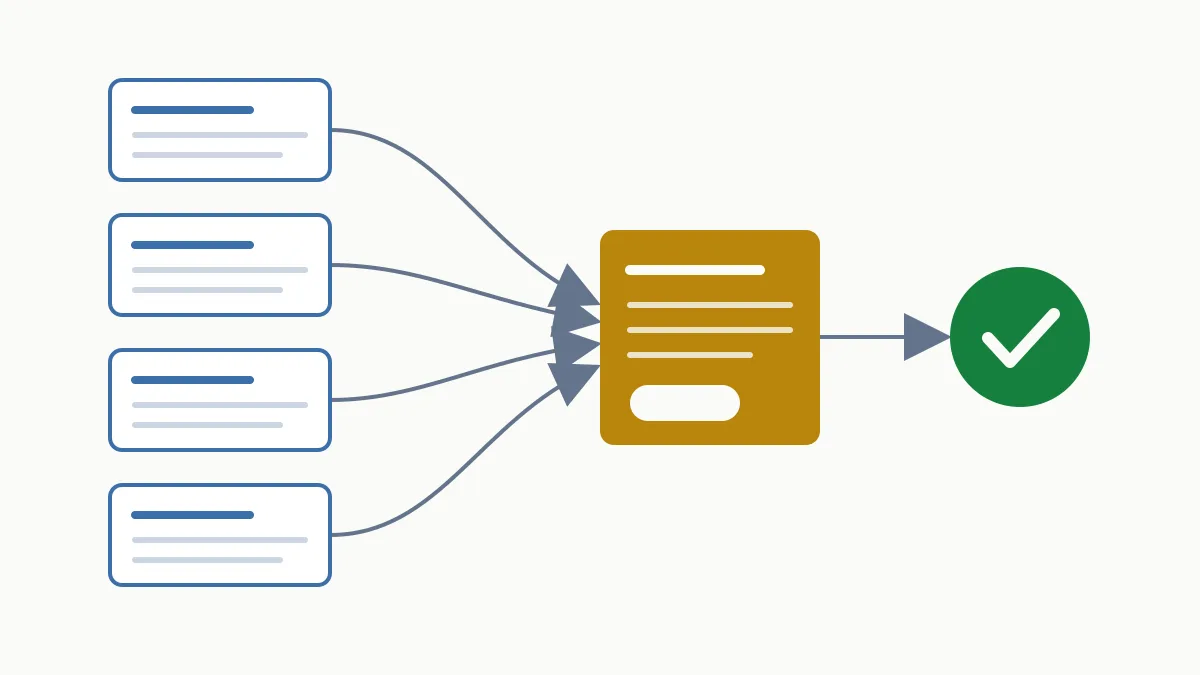
- One goal and one reader. “Winning quote requests from residents' associations” is a goal; “having a presence” is not.
- Topics that come from real questions. Write down what people ask you by phone and email, and check in Search Console which searches already show your site without a page that answers them well.
- A pace you can keep. Two articles a month for two years are worth more than twenty in the first month and silence afterwards. Choose the frequency with your worst month of the year in mind, not your best.
- An owner and a workflow. Who proposes the topic, who writes, who checks it is correct and who publishes. Without a name next to each step, the blog depends on enthusiasm.
- Every article tied to a service. Before writing, decide which page of the site it will send the reader to at the end.
- A maintenance plan. Set aside time to update what already works: prices, regulations, deadlines. An outdated article does more harm than an unpublished one.
Who should write? Whoever knows the subject. A car repair shop in Manresa has the answers in the head of the workshop manager, not in that of an outside copywriter. What can be delegated is giving them shape: interviewing, organising and drafting. For the writing and optimisation side there are two specific guides: how to write SEO articles that rank and SEO for blogs.
How to measure whether it works
Measure a few things and always the same ones. For an SME, these are enough:
| What to look at | Where | What it tells you |
|---|---|---|
| Clicks and impressions for blog URLs | Search Console, filtered by the blog folder | Whether Google shows the articles and people click through |
| Searches per article | Search Console, by page | Whether the article attracts the reader you wanted |
| Movement to service pages | Web analytics | Whether the reader carries on towards what you sell |
| Enquiries that began on an article | Web analytics and asking customers | Whether the blog brings business |
Give it time: new articles do not usually show their result until some months have passed. Review the figures every quarter, not every week. For a complete method, see how to measure SEO results.
Mistakes that get blogs abandoned
- Talking only about the company. Nobody searches Google for your Christmas dinner.
- Starting too hard. An impossible calendar is abandoned by the third month.
- Articles that lead nowhere. With no link to the service and no invitation to get in touch, the reader leaves.
- Repeating topics. Three articles on the same subject compete with each other; we explain it in SEO cannibalization.
- Publishing without review by someone who knows. A technical error in an article about your own trade costs credibility.
Before writing, decide what for
A corporate blog works when each article answers a real question and leads to a service. If you want to know which searches are already within reach of your site, start with the free initial analysis. And if you would rather have someone run the calendar and the writing, see our SEO content service.
Frequently asked questions
What is a corporate blog?
It is the section of a company's website where it regularly publishes its own content to answer customer questions, show experience and attract visits from search engines.
How often should you publish?
As often as you can sustain for years. For many SMEs, two well-crafted articles a month are a good starting point. Consistency matters more than volume.
Who should write a company blog?
The knowledge has to come from whoever does the work. The writing can be delegated to someone in-house or external, as long as an in-house expert reviews the content before it is published.
How long does a corporate blog take to deliver results?
It usually takes a few months for articles to start receiving visits from Google, and longer for them to show up in enquiries. That is why it is best judged by quarters.
Blog or social media?
One does not replace the other. Social media gives immediate reach that fades in days; a blog article can receive visits for years. The most efficient approach is to write on the blog and share it on social media.