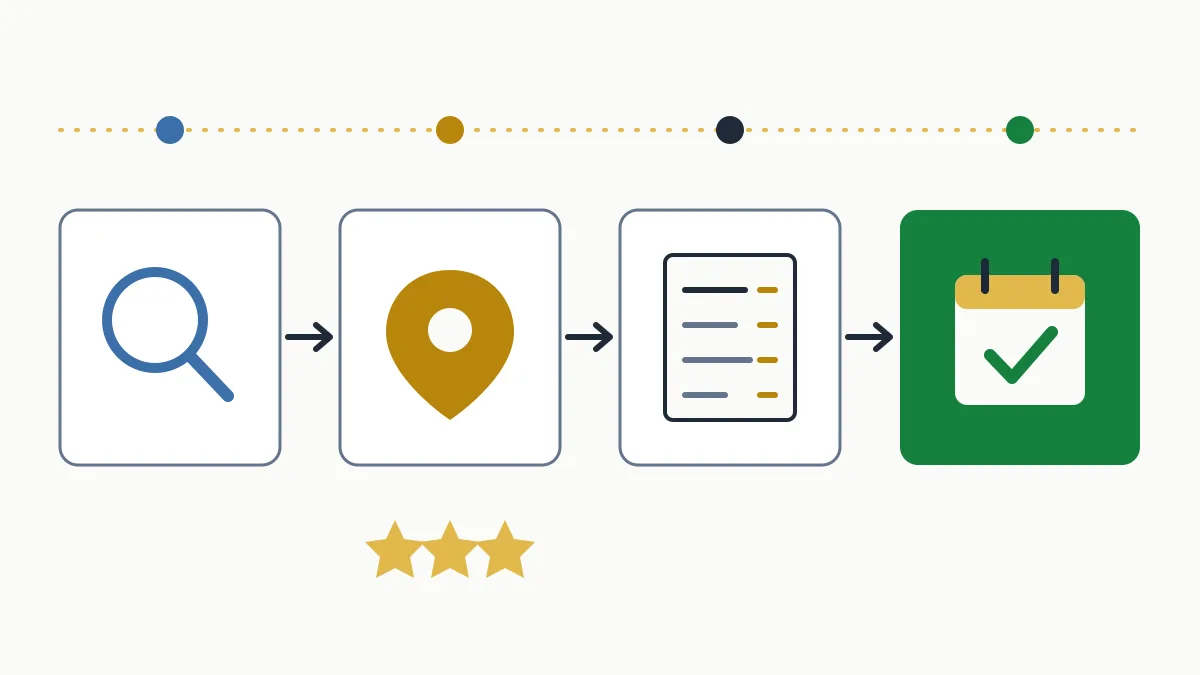
SEO for hotels means getting your own website, not just the booking portals, to appear on Google when someone looks for a place to stay in your destination or searches for your hotel by name. It is worked on four fronts: winning the search for your own brand, pages by type of stay and destination, a Google profile with reviews, and hotel structured data.
Everything below applies equally to a city hotel, a rural guesthouse, a hostel or holiday apartments.
1. Direct booking or portals: where your website can win
Online travel agencies (OTAs) hold the generic searches, and an independent hotel will not push them out. The good news is that it does not have to: there are searches your website can win, and they are the ones that end in a direct booking, with no commission.
| Type of search | Example | Who usually wins | What you need to do |
|---|---|---|---|
| Generic | “hotels in Sitges” | Portals and Google's hotel module | Keep the profile spotless; do not burn website effort there |
| Brand | “[hotel name]”, “[name] phone” | Your website, if you look after it | A fast site, a visible booking engine and a reason to book direct |
| Specific stay | “rural house with pool in La Garrotxa”, “dog-friendly hotel in La Cerdanya” | Whoever has a specific page | One page per type of stay |
| Planning | “what to do in the Vall de Boí in autumn” | Destination content | Your own guides to the area |
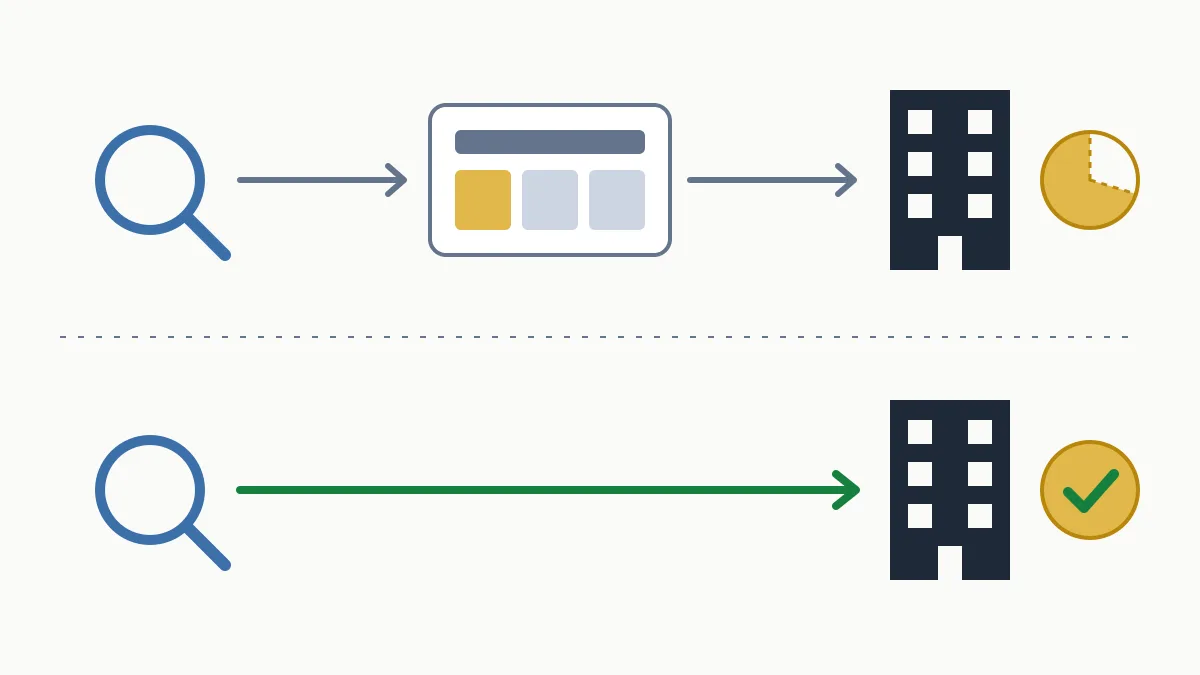
Brand search is the first one to protect. Many travellers discover the hotel on a portal and then search for it by name to see the website. If at that moment your site is slow, shows no prices or gives no reason to book there, they go back to the portal. It is also common for portals to advertise on your hotel's name.
2. Pages by type of stay
Nobody searches for “accommodation” in the abstract. They search for a getaway on a specific weekend, with a specific person. Every reason to travel that you genuinely cater for deserves a page:
- Couples' getaway: suitable rooms, dinner, spa or bathtub if you have them.
- Families: connecting or quadruple rooms, cots, pool, what is nearby for children.
- With a dog: conditions, supplement, areas where it is allowed. It is a very specific search with little well-explained supply.
- Groups and whole houses: capacity, bed layout, kitchen, rules.
- Events: weddings, company meetings, retreats.
- Activity: hiking, cycle touring (workshop, bike storage), skiing, wine tourism.
Plus a page per room type, with size, beds, views and your own photos. What I do not recommend is creating pages for services you do not have: the guest who arrives expecting a pool that does not exist will say so in the review.
3. Destination pages
Here you have an advantage no portal can copy: you know the area. A farmhouse in the Priorat can explain which wineries are within walking distance, when the harvest happens and what to do on a rainy day. A hotel in the Vall de Boí, which Romanesque churches are ten minutes away and what access is like in winter.
That content reaches the traveller who is still planning and has not chosen where to stay. To make it work:
- Organise it by season and by interest, not as one block called “surroundings”.
- Give real distances and times from the hotel.
- Keep it current: a fair that no longer runs or a closed restaurant costs you credibility.
- Link each guide to the matching stay page and to the booking engine.
4. A hotel's Google profile
A hotel's profile does not work like a shop's. Google shows it with a price and availability module where the portals appear, and with fields specific to the sector. The general part is in the Google My Business guide; what is specific:
- Services and amenities: pool, parking, wifi, pets allowed, accessibility. These are the filters searchers use.
- Check-in and check-out times and the property's class.
- Your price in the booking module. Google offers free booking links so the official site can appear alongside the portals. Your booking engine or channel manager normally has to be connected to Google: ask your provider.
- Your own up-to-date photos of every room type, not just the façade.
- Seasonal closure clearly marked, if you close for some months.
5. Guest reviews
Travellers read opinions in more than one place before booking, and the ones on the Google profile are what they see when they search for you by name. The general method is in how to get Google reviews; for accommodation I would add:
- Ask at check-out or in an email the next day, with the direct link to the profile.
- Reply to all of them. For a complaint, say what you fixed: the reply is read by the next guest, not the one who has already left.
- Use them as a content guide. If three reviews ask about parking or breakfast, that information is missing from the website.
- No incentives: a discount in exchange for a review breaks Google's policies.
6. Hotel structured data
Structured data is code that describes the property in a format search engines understand without ambiguity. For accommodation there are specific types (hotel, hostel, bed and breakfast, campground) and dedicated properties: address and coordinates, check-in and check-out times, class, amenities, whether pets are allowed, price range and images.
Two rules: what you mark up must be visible on the page and must be true. It guarantees no ranking, but it saves Google from having to infer basic facts. The technical detail is in the structured data guide.
7. Common mistakes and order of work
- Descriptions copied from the portal to your own site (or the other way round): the same text everywhere.
- Photos of several megabytes that make the home page slow to load on a phone. We explain it in web speed and SEO.
- A booking engine that opens on another domain, with no tracking: you do not know which pages bring bookings.
- A website in a single language when a good share of guests come from abroad.
- One “rooms” page and one “surroundings” page, with no stay pages at all.
The order I would follow: brand search (fast site, visible engine, direct advantage), profile and booking link, stay pages, structured data and then destination. If you want to know which searches you win today and which you hand to the portals, we will check in the free initial analysis.
Frequently asked questions
Can a small hotel compete with the portals on Google?
On generic city searches, hardly. On searches for its own name and on specific stay searches (with a dog, with a pool, for groups, in a particular county), yes, because there the most precise page wins.
Is it worth having your own website if nearly everything comes through portals?
Yes. Your own site is the only commission-free channel and the only one where you decide what is said. Many guests who find you on a portal then search for you by name; if the site convinces them, some book direct.
Which languages should a hotel website be in?
Those of your real guests. Look at where bookings come from and start there. Each language needs its own URLs and a reviewed translation, not an unchecked automatic one.
How long does SEO take to show for a hotel?
Improvements to brand search and to the profile show within weeks. Stay and destination pages need a few months, and are best published ahead of the season in which people search for them.