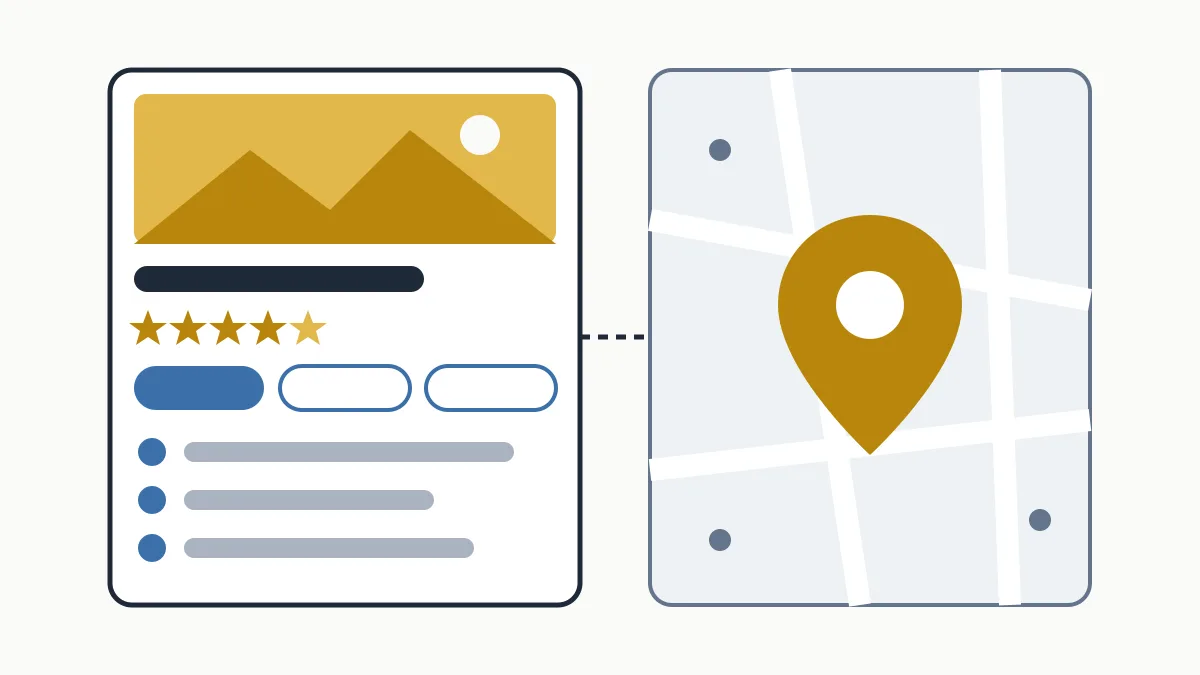
Business directories are websites that list companies by activity and area, with each one's name, address, phone number and website. For a small business they do two things: people searching the directory itself can find you and, above all, your contact details appear the same everywhere, which keeps your local SEO consistent. You do not need to be in all of them: a dozen well-chosen ones is enough.
Here is what they genuinely contribute, which make sense in Spain and Catalonia depending on the type of business, and a method for getting listed without leaving duplicate entries behind. I checked in October 2026 that the ones I name exist; check each one's listing terms and prices on its own website, because they change.
| What they are | Listings of businesses by activity and area |
|---|---|
| What they are for | Direct visibility and consistent data across the web |
| Key data | NAP: name, address and phone, always identical |
| How many you need | A few relevant ones, not hundreds |
| Main risk | Duplicate or outdated listings |
What business directories are
They are the heirs of the printed phone book. There are four kinds, and it pays not to mix them up:
- Map platforms and search engines, where people search every day: the Google Business Profile, Bing Places and Apple Business Connect.
- General directories, which accept any activity.
- Sector directories, where customers go to compare professionals in a specific trade.
- Local and institutional directories: chambers of commerce, trade guilds, retailers' associations and town councils.
There is a fifth family that is not quite a directory: company-information websites, which publish data on registered companies from public sources. You do not sign up there; you simply appear. Your job is to check that the details are correct.
What they do for local SEO: NAP citations
In local SEO, a citation is any mention of your business with its NAP: name, address and phone. Directories are the simplest way to get them.
Why do they matter? Google explains that it orders local results by relevance, distance and prominence, and that prominence is based on information such as the number of websites linking to your business and the reviews it has. Consistent details across several trustworthy sites help make it clear that the business exists, where it is and what it is called. The wider framework is in what is local SEO.
Which are worth it in Spain and Catalonia
| Type | Examples | Who for |
|---|---|---|
| Maps and search engines | Google Business Profile, Bing Places, Apple Business Connect | Everyone. The first thing to have |
| General | Páginas Amarillas, QDQ, Cylex, Yelp | Any business with local customers |
| Business to business | Europages, Kompass | Manufacturers, wholesalers and exporters |
| Sector | Tripadvisor (restaurants and tourism), Doctoralia (health), Habitissimo (renovations) | Businesses in the relevant sector |
| Company information | Empresite, einforma | Registered companies: check the details are correct |
| Catalonia and local | Directori.cat, the chamber of commerce, the trade guild, the retailers' association, the council website | Businesses with nearby customers |
Two remarks on the table. First, some of these sites offer paid plans on top of the basic listing; look at what each includes before signing anything, because for a small business the basic listing is usually enough. Second, local directories are the ones fewest people consider and often the most useful. A hardware shop in Manresa listed on its neighbourhood retailers' association website has a mention no outside competitor can copy.
How to choose them: four questions
- Does it appear on Google when you search for your service and your town? If the directory is on page one, it has real visitors.
- Are your serious competitors there? If none are, probably nobody passes through.
- Is it looked after? Listings with current details, no businesses that closed years ago, no pages drowning in ads.
- Will you be able to edit or delete the listing later? If there is no way to correct details, do not sign up.
Be wary of “listing in 500 directories” packages: most are sites nobody visits, and the day you change your phone number you will have five hundred listings you cannot fix.
How to get listed without duplicates
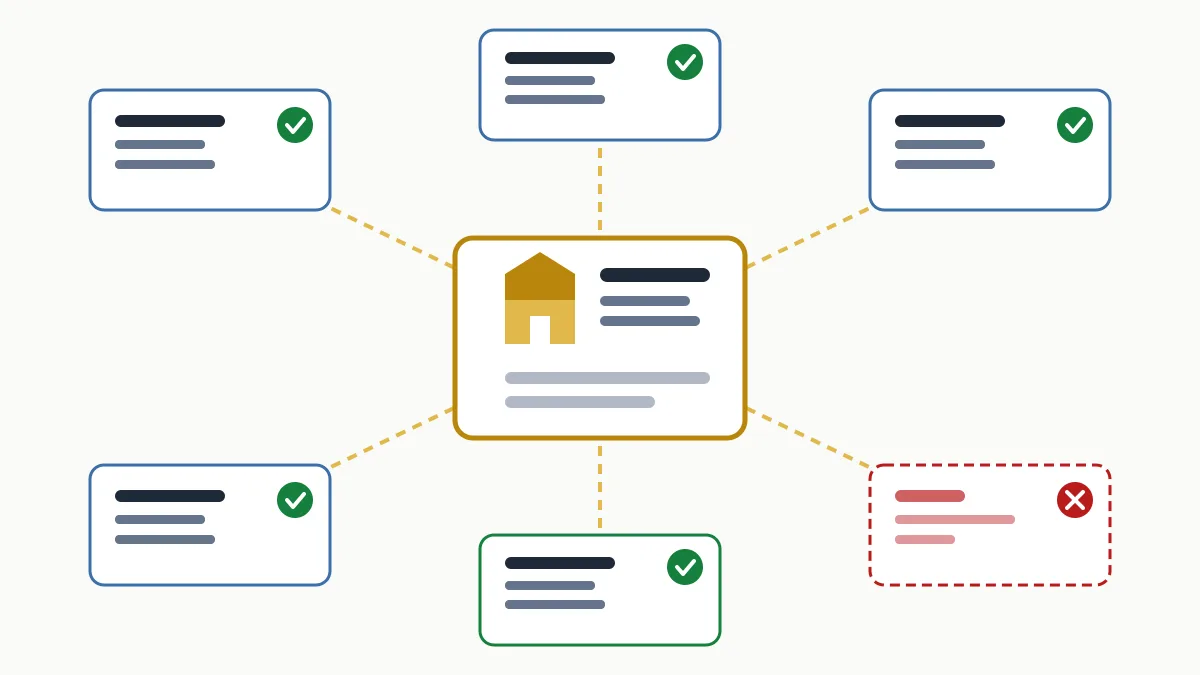
- Write your reference NAP in a document: exact trading name, address in the same format, a single phone number, the website URL, opening hours and a two-line description. Everything you publish comes from there, copied and pasted.
- Search for yourself before creating anything. In each directory, look up the business name, phone and address. A listing created automatically may well exist already.
- If it exists, claim it. Nearly all of them have an option to verify you are the owner. Creating a new one alongside is how duplicates are born.
- Use a company email address, not an employee's personal one, and note the username and sign-up date in a spreadsheet.
- Choose the category carefully and upload the logo and two or three real photos.
- Review it once a year and whenever you change address, phone, hours or name.
Common mistakes
- Varying the name: “Vila Carpentry”, “Vila Carpentry SL” and “Vila Carpenters Girona” are, to a machine, three businesses.
- Different phone numbers in each place: the landline here, the mobile there and a tracking number somewhere else.
- Forgetting the listings when you move. The old address keeps circulating for years.
- Stuffing the description with keywords instead of explaining what you do.
- Paying to be featured in a directory with no visitors.
- Leaving everything to a supplier without keeping the logins yourself.
Directories are a small part of what happens outside your website; the rest is covered in off-page SEO. If you want to know how your business details appear across the web today and what to correct first, ask us for the free initial analysis, or see what our local SEO service includes.
Frequently asked questions
How many business directories should I be listed in?
For most small businesses the three map platforms, three or four general ones, those for your sector and the local ones are enough. Beyond that, the return is minimal.
Are free directories any use?
Yes, if they have visitors and are looked after. What counts is that the directory is relevant and your details are correct, not whether the listing is paid.
What is NAP?
The name, address and phone number of the business. They should be identical on your website, on your Google profile and in every directory.
What do I do if a directory has incorrect details about me?
Claim the listing as the owner and correct it. If there is no such option, write to the directory and ask for a correction or removal.