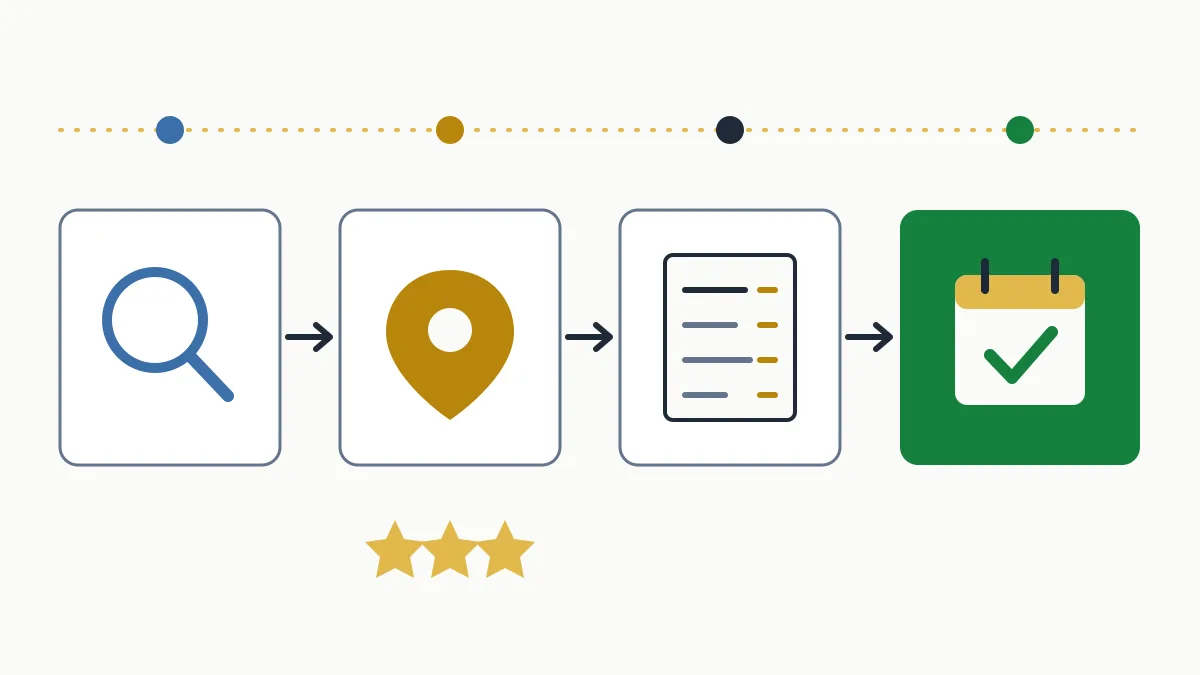
SEO for dentists means getting your dental clinic to appear on Google when someone in your area searches for a specific treatment (“dental implants in Sabadell”), a dentist nearby or an emergency. You get there with one page per treatment, a well-categorised Google profile, a steady flow of reviews and a website that shows who is behind it.
The same applies if you search for it as SEO for dental clinics. What is common to any healthcare centre is already in the SEO for clinics guide; this covers only what is specific to dentistry.
1. How a dental patient searches
Hardly anyone searches for just “dentist”. They search for what is wrong or what they want done, and each type of search calls for a different page:
| Type of search | Example | What answers it |
|---|---|---|
| Treatment + city | “dental implants in Girona”, “invisible braces in Terrassa” | That treatment's page |
| Emergency | “emergency dentist in Barcelona”, “dentist open Saturday” | Emergency page and the hours on the profile |
| Proximity | “dentist near me”, “dental clinic in Gràcia” | The Google profile |
| Prior doubt | “how long does a root canal take”, “do implants hurt” | Informational content linking to the treatment |
| Type of patient | “children's dentist in Lleida”, “dentist for nervous patients” | A dedicated page for that profile |
2. One treatment, one page
What I find most often when auditing a dental clinic is a single “Treatments” page with twelve services in twelve paragraphs. That page cannot compete for implants, orthodontics and whitening at once: each search wants a complete answer.
Every treatment you want to sell needs its own page, with:
- What it is and who it is for, in a patient's words, not a textbook's.
- What the process is like: how many visits, how long each takes and what happens in between.
- Who performs it: the dentist's name, speciality and registration number.
- How it is quoted: what the cost depends on, whether the first visit is charged and whether financing exists. You do not need to publish fees to explain it well.
- Real questions your front desk hears: pain, recovery, how long the result lasts.
- A way to book that is visible on a phone.
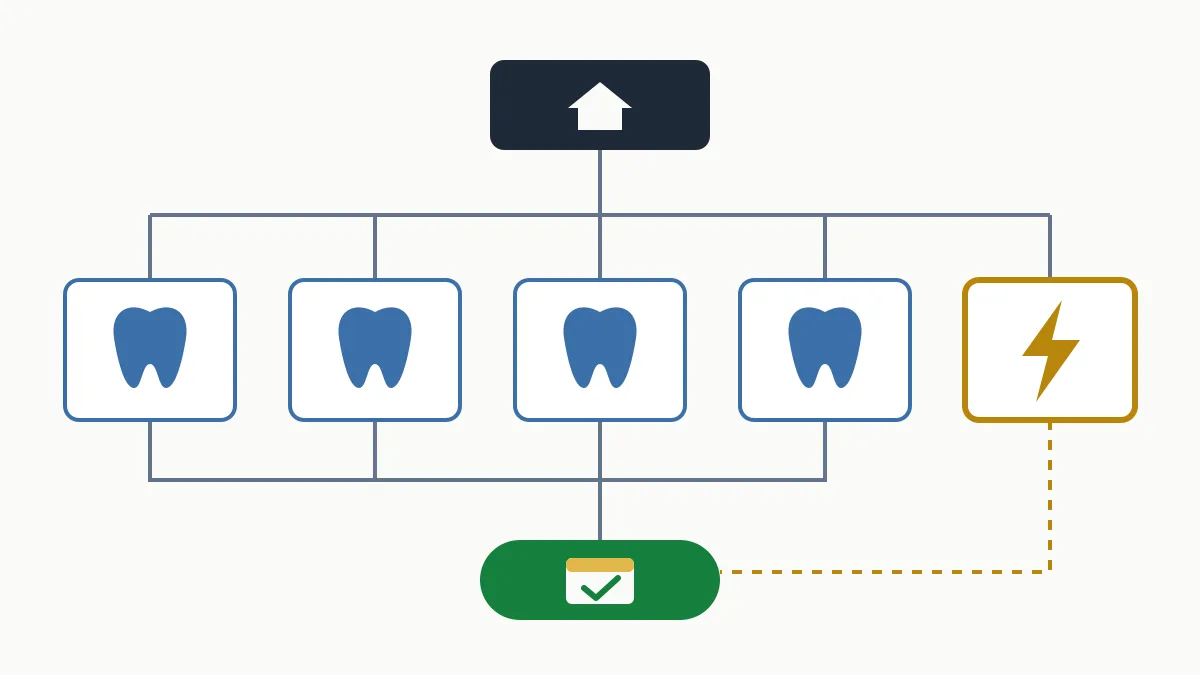
Start with the treatments you most want to fill (usually implants, orthodontics and cosmetic dentistry) and then cover the rest: endodontics, periodontics, paediatric dentistry, prosthetics. And a warning: cloning the same page and changing only the neighbourhood or town name is not a strategy, it is duplicate content under another title.
3. Dental emergencies: the search that will not wait
Someone looking for an emergency dentist is in pain and calls the first clinic that inspires confidence. If you take emergencies, they deserve their own page:
- What you treat as an emergency: acute pain, abscess, broken tooth, a blow to a child's mouth, a loose prosthesis.
- The real hours you do it and how to reach you: a tappable phone number at the top of the page.
- What to do until the appointment, written or reviewed by a dentist.
4. A dental clinic's Google profile
The general part of the profile is in the Google My Business guide, and how to climb the map in how to show up on Google Maps. What changes for a dental clinic:
- Categories. The primary one, “Dentist” or “Dental clinic”. As secondary ones, only the specialities you really offer (orthodontist, periodontist, paediatric dentist).
- Services. The profile lets you list treatments with a description; match them to the pages on your website.
- Appointment link to your booking system or form.
- Practitioner profiles. Google allows an individual practitioner to have a profile in addition to the clinic's. If you are the only dentist, one is enough. If there are several of you, decide deliberately: reviews left on a doctor's profile leave with them if they change clinic.
- Real photos of treatment rooms, reception and team. Patients want to see where they will walk in.
5. Patient reviews without breaching confidentiality
The method for asking is the same as for any local business (see how to get Google reviews), with three differences:
- Timing. Ask when the treatment is finished or at the check-up, once the patient can see the result; not on the way out of an extraction.
- The reply. When replying, never confirm what that person had done, or even that they are your patient: it is health data. Say thank you, or invite them to call the clinic to talk it through.
- Nothing in return. A free cleaning for a review breaks Google's policies.
And a technical detail that saves arguments: Google does not show stars in results for reviews a clinic marks up about itself on its own website. The ones that count are on the profile.
6. Healthcare trust on the website
Health is one of the topics where Google's quality guidelines ask for more assurance about who stands behind the content. For a dental clinic that translates into very concrete things: a team page with names, training and registration numbers; treatment copy reviewed by a named dentist; the centre's healthcare authorisation number in view, and no promised outcomes. Before publishing offers or before-and-after photos, check with your professional college: healthcare advertising is regulated.
Structured data helps Google understand that you are a dental clinic (there is a specific type for dentists); the details are in the structured data guide.
7. Common mistakes and order of work
- Every treatment on a single page.
- Stock photos of smiles that are not the clinic's.
- Copy lifted from the implant or aligner manufacturer, identical to a hundred other clinics'.
- Duplicate profiles: the clinic, the doctor and an old one with a different phone number.
- A long booking form, or one that works badly on a phone.
The order I would follow: profile and categories, pages for the three priority treatments, an emergency page if relevant, a review routine and the team page. If you want to know which treatments you already appear for and which you do not, we will check in the free initial analysis; and if you would rather hand it over, this is our local SEO service.
Frequently asked questions
Do I need a page for every dental treatment?
For every treatment you want to win from Google, yes. Someone searching for implants wants a page about implants from top to bottom, not a paragraph in a list. Start with the three that matter most to you.
Can I reply to a negative review explaining what happened?
Not with clinical detail. When replying you must not reveal health data or confirm the person is a patient. Reply respectfully, without going into the case, and offer a private way to discuss it.
If I have two clinics, do I need two Google profiles?
Yes, one per address, each with its own phone number and linked to a dedicated page on the website for that location, not to the generic home page.
Is SEO for dentists the same as SEO for dental clinics?
Yes. They are two ways of searching for the same thing: ranking the website and the profile of a dental practice or clinic so that local patients find it.