GEO, generative engine optimization, is the work of preparing a website so that generative engines (Google’s AI summaries, ChatGPT with search, Perplexity, Gemini) use it and cite it as a source when they write an answer. It does not replace SEO: it builds on it. What changes is the goal: SEO wants a place in a list of results; GEO wants a place inside the answer.
A warning before going further: a lot of unfounded recipes circulate about GEO. Here I separate what the search engines themselves document from what is our own judgement, and I label it as such.
What GEO (generative engine optimization) actually is
A generative engine does not return ten links: it searches, reads several pages and writes its own answer, usually with links to the sources. GEO is the set of technical, content and reputation decisions aimed at making your page one of those sources.
Two points worth being clear about from the start:
- It is not a standard. It is an industry label. No engine publishes a “list of GEO factors”, and anyone selling you a closed one has made it up.
- Every engine works differently. What is worth working on is what they share: being able to read your page and finding something in it worth citing.
| What it is | Preparing a site to be a cited source in AI-generated answers |
|---|---|
| Goal | Appearing inside the answer, not only in the list of results |
| Where it plays out | Google’s AI summaries, ChatGPT with search, Perplexity, Gemini |
| What it is not | A replacement for SEO or a technique with official rules |
How a generative engine builds its answer
Simplified, the process has four steps. The detail varies by engine, but the outline is common to those that search the web before answering:
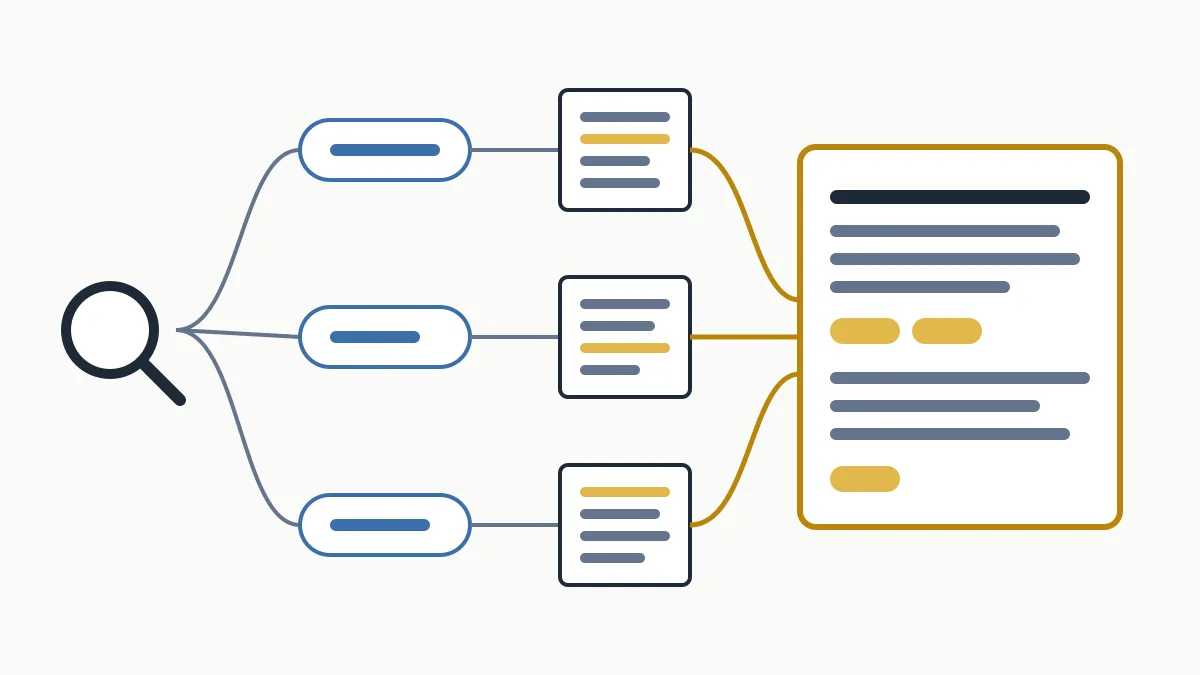
- It breaks the question down. A long question becomes several searches on subtopics. Google calls this “query fan-out” in its documentation on AI Overviews and AI Mode.
- It retrieves pages. Google draws on its search index; other engines have their own crawlers or rely on third-party indexes.
- It extracts passages. It does not use the whole page, only the parts that answer each sub-question.
- It writes and links. It composes new text and adds the sources.
Two consequences follow. The first is a fact: a page that is not crawled and indexed cannot be cited. The second is our own inference from that mechanism: what competes is no longer so much the whole page as the passage that answers one specific sub-question.
GEO vs SEO: the real differences
| Aspect | SEO | GEO |
|---|---|---|
| Goal | Position in the list of results | Being a cited source inside the answer |
| Type of query | Keywords, often short | Long, conversational questions, broken into sub-searches |
| Unit that competes | The page | The passage (our judgement) |
| Technical base | Crawling and indexing | The same, plus not blocking each engine’s search crawlers |
| Measurement | Clicks, impressions and position in Search Console | Fuzzier: Search Console counts AI features within the “Web” search type, without separating them |
What does not change matters more than what does. Google states in its documentation for site owners that there are no additional requirements and no special optimisations needed to appear in AI Overviews or AI Mode: the page has to be indexed and eligible to be shown with a snippet in Search.
What gets content cited by generative engines
What is documented
- Access. The page has to be crawlable, indexable and eligible for a snippet. Google documents that preview controls (nosnippet, data-nosnippet, max-snippet) and noindex also limit what its AI features can show from your page.
- Crawlers. Each engine publishes its own and says it respects robots.txt. OpenAI documents separate agents for ChatGPT search (OAI-SearchBot) and for model training (GPTBot); Perplexity documents PerplexityBot. Blocking the search one removes you from that engine’s answers. At Google, the Google-Extended token controls use for Gemini and, according to its documentation, does not affect inclusion in Search.
- Content as text. Google recommends that important content is available in textual form and that structured data matches what is visible on the page.
- No special files. Google says there is no need to create AI text files or any new markup to appear in its AI features.
What is our own judgement (not a published rule)
The reasoning is this: if the engine works with passages and has to attribute them to a source, the passage that stands on its own and contains something specific has the advantage. From there, what we recommend:
- Self-contained passages. Each section answers one question and makes sense without the rest.
- Specifics. Timescales, conditions, price ranges, steps. A bare “it depends on the case” cannot be cited.
- Information only you have. Your process, your area, your terms. The engine can already write the generic text itself.
- A clear entity. Who you are, where you are and what you do, stated the same way on the site, on your Google Business Profile and in directories. We develop this in the article on E-E-A-T in SEO.
- Date and upkeep. Content with a visible date that is kept up to date can be cited with less risk than abandoned content.
An example. An accountancy firm in Girona has two options for its page on setting up a company: text saying that “every case is different and we support you throughout”, or text that explains the steps, which documents it asks for, how long it usually takes at that firm and what its fees include. The second contains passages an engine can extract and attribute. The first does not.
What is sold as GEO with nothing behind it
- “We guarantee ChatGPT will recommend you.” Nobody outside controls a generated answer, which can also vary from one query to the next.
- The llms.txt file as an access key. It is a proposal, not a standard, and Google says it does not need files of that kind.
- “AI-specific” schema. There is no such thing. The useful structured data is the usual kind, which we explain in the structured data guide.
- Improvement percentages with no method. If nobody explains how it was measured, it is not data.
- Hidden text with instructions for the AI. Hidden text is a practice covered by Google’s spam policies.
Where a small business starts
- Check indexing of the pages that matter in Search Console.
- Review robots.txt: make sure you are not unintentionally blocking the search crawlers of the engines you want to appear in.
- Pick five to ten questions customers ask before hiring you and answer them with your own facts, one per section.
- Make your business details consistent across the site, your Google Business Profile and directories.
- Test it: put those questions to the engines, note whether you appear and who does, and repeat every quarter.
For the engine-by-engine detail, see the guide to SEO for AI on ChatGPT, Gemini and Google AI, the step-by-step guide to Google AI Overviews and the one on SEO for Perplexity. And if what you want is to format direct answers (featured snippets, frequent questions, voice), that is AEO and we cover it in AEO and SEO.
If you would rather we check whether your site is readable and citable, request the free initial analysis. And if what you lack is content with substance, see how we approach SEO content.
Frequently asked questions
Does GEO replace SEO?
No. On Google, AI features draw on the same search index and its documentation says no special optimisations are needed. Without an indexed, useful page there is nothing to cite.
Do I need an llms.txt file to do GEO?
It is not a requirement. It is a proposal that has not become a standard, and Google says there is no need to create AI text files to appear in its features.
How do I know whether an AI cites my website?
For now you have to check by hand: put your customers’ questions to each engine and look at the sources. Search Console counts that traffic within “Web” without separating it, and in your analytics you can see visits arriving from those engines’ domains.
Are GEO and AEO the same thing?
They overlap, but no. AEO focuses on formatting the direct answer to a question; GEO on being a cited source when a generative engine composes an answer from several pages.